

TORQUEMASTER SPRINGS
TorqueMaster Spring Repair & Replacement in Visalia, CA
If your garage door was made by Wayne-Dalton, there’s a good chance it doesn’t use a standard exposed torsion spring — it likely uses an enclosed system called TorqueMaster that needs a different repair approach.
If your garage door was made by Wayne-Dalton, there is a good chance it does not use a standard exposed torsion spring at all. Instead, it likely uses a system called TorqueMaster, where the spring (or springs) are sealed inside the torsion tube itself rather than mounted in the open above the door. This design looks different, fails differently, and needs a different repair approach than a standard torsion or extension spring setup.
What Is a TorqueMaster Spring System?
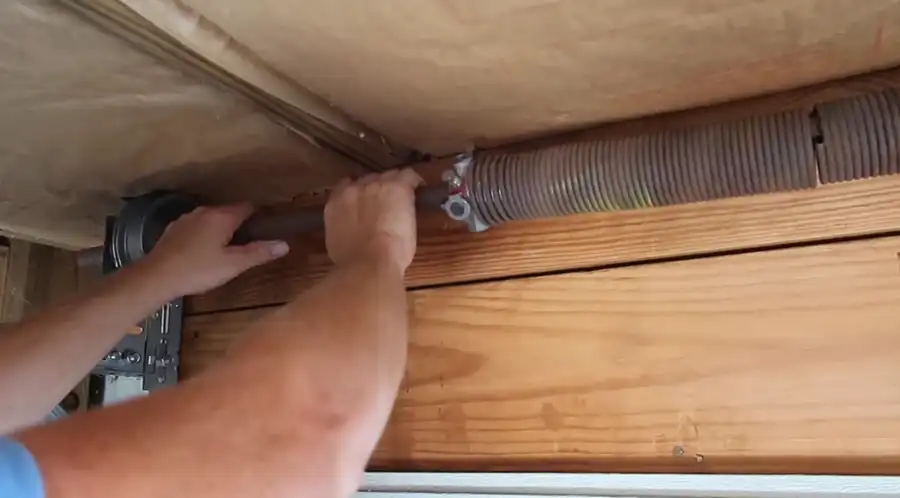
In a standard torsion spring setup, you can see the spring: it is a coiled metal spring mounted on a shaft above the door’s center, usually with a visible winding cone at each end. A TorqueMaster system hides the spring inside a tube that doubles as the torsion shaft, so the spring itself is not visible even when you are looking directly at it. TorqueMaster Plus systems use two independent springs stacked inside the same tube rather than one larger spring, which is part of how Wayne-Dalton achieves a more compact, enclosed design.
How to Tell If a TorqueMaster Spring Is Broken
Because the spring is hidden, a broken TorqueMaster spring does not always look as obviously “snapped” as a standard torsion spring, which usually shows a visible gap once it breaks. Signs include the door feeling noticeably heavier than normal when lifted manually, the opener straining or struggling to lift the door, the door only opening partway before stopping, and in some cases a loud bang or pop at the time of failure, similar to a standard spring breaking, even though the break itself is hidden inside the tube.
Why TorqueMaster Repairs Are Different (and Why DIY Is Riskier)
A standard torsion spring repair uses winding bars and a known, visible winding process that many experienced DIYers have at least seen demonstrated. TorqueMaster’s enclosed design means the tensioning mechanism is inside the tube, which makes it harder to visually verify tension state before working on it, and the parts (cones, cables, tube assembly) are specific to the Wayne-Dalton system rather than universal torsion spring hardware. Manufacturer guidance and most professional installers treat TorqueMaster spring work as needing more specialized handling than a standard exposed torsion spring, precisely because you cannot see the spring’s state before you start.
Given that any garage door spring system stores significant tension and has injured people who attempted DIY repairs without the right tools and training, this caution applies even more to a system you cannot visually inspect before working on it.
Repair vs Replacement for TorqueMaster Systems
Depending on the failure and the age of the unit, a TorqueMaster tube assembly can sometimes be repaired in place, and in other cases the full enclosed tube and spring assembly is replaced as one unit rather than repairing the internal spring alone. Some homeowners also choose to convert an aging TorqueMaster system to a standard exposed torsion spring setup during a repair, since standard torsion springs are more universally available and easier to service in the future. Which option makes sense depends on the specific unit’s age, condition, and parts availability.
Frequently Asked Questions
How do I know if my garage door has a TorqueMaster system instead of a standard spring?
Look above your garage door at the horizontal shaft running across the top. If you can see an exposed coiled spring on the shaft, it is a standard torsion spring. If the shaft looks like a plain solid tube with no visible coil, it is likely a TorqueMaster or similar enclosed system, common on Wayne-Dalton doors.
Is TorqueMaster spring repair more expensive than standard torsion spring repair?
It can be, since the parts are specific to the Wayne-Dalton system rather than universal torsion spring stock, and the repair or replacement process for an enclosed unit is more involved than winding a standard exposed spring.
Can a TorqueMaster system be converted to a standard torsion spring?
In many cases yes, and some homeowners choose this route specifically because standard torsion springs are easier to source and service long-term. Whether conversion makes sense for your specific door depends on the door’s size, weight, and current track and hardware setup.
Is it safe to try to diagnose a TorqueMaster issue myself?
You can safely look for the visual signs described above (a heavier-feeling door, a struggling opener, a door that stops partway) without touching the spring system itself. Actually servicing or replacing the enclosed tube assembly involves stored tension you cannot see or verify visually, which is why this is not a recommended DIY repair.
Think You Have a TorqueMaster Spring Issue?
If your garage door is a Wayne-Dalton model and is suddenly heavier, struggling, or stopping partway, call (559) 315-3236 and mention that you suspect a TorqueMaster or enclosed spring system so we can bring the right parts and tools for the visit.